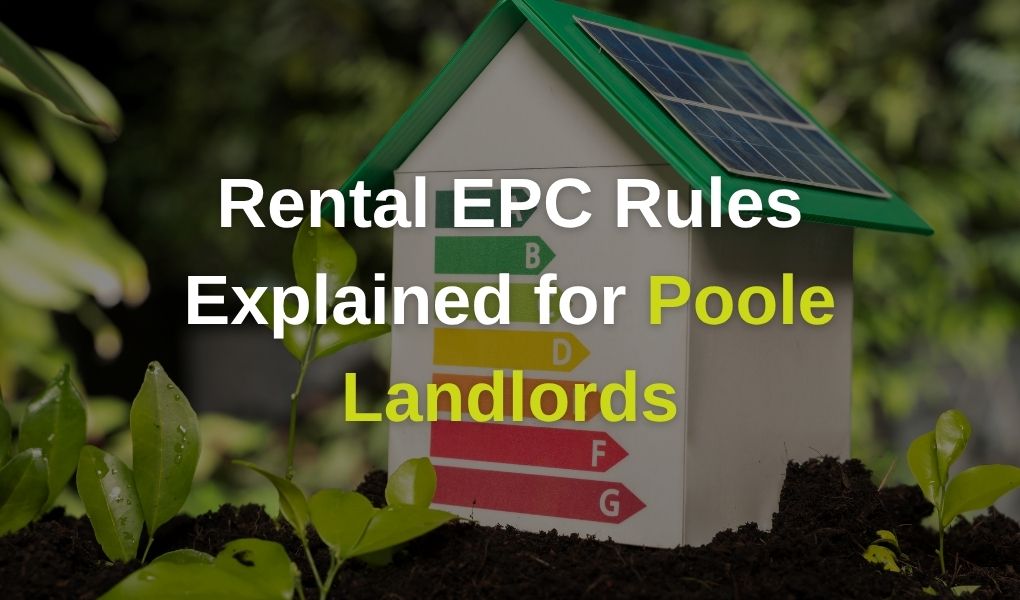
If you own a rental property in Poole, your Energy Performance Certificate (EPC) is an important part of your responsibilities as a landlord.
It isn’t simply a document that sits in a file until you come to market the property. Your EPC can affect whether you are legally able to let the property, what improvements may be required and how attractive the property is to prospective tenants.
With energy-efficiency standards changing and further requirements on the horizon, it’s understandable that landlords aren’t always sure what applies to them now and what they need to prepare for in the future.
So, what are the current EPC rules for rental properties? What happens if your property is rated F or G? And should Poole landlords be thinking about EPC C now?
Here’s what you need to know.
What Is an EPC?
An Energy Performance Certificate measures the energy efficiency of a property and gives it a rating from A, which is the most efficient, through to G, which is the least efficient.
It also provides recommendations for improvements that could make the property more energy efficient.
For most properties, an EPC is valid for 10 years unless a newer certificate is produced during that period.
For landlords, however, having a valid certificate isn’t necessarily enough. The property’s rating can determine whether it can legally be rented.
What Is the Minimum EPC Rating for a Rental Property in Poole?
For most privately rented domestic properties in England, the current minimum energy-efficiency standard is E.
Under the Minimum Energy Efficiency Standards (MEES), landlords generally cannot let or continue to let a property covered by the regulations if it has an EPC rating of F or G, unless a valid exemption applies.
In simple terms:
A to E: The property meets the current minimum EPC requirement.
F or G: The property will generally need improvement to at least an E rating, unless a valid exemption applies.
These are national requirements, so the same basic rules apply whether your rental property is in Parkstone, Lower Parkstone, Canford Heath, Hamworthy, Broadstone or elsewhere in the Poole area.

Do I Need an EPC Before Marketing My Poole Rental?
Yes.
An EPC needs to be commissioned before a property is marketed for rent, and the energy performance information needs to appear in relevant advertising.
There are limited circumstances where additional time can be available to obtain the certificate after marketing begins, provided the required reasonable efforts have been made. However, this shouldn’t be viewed as an excuse to leave the EPC until the last minute.
For a landlord preparing a property for the rental market, the sensible approach is to check the EPC position before the property is advertised.
That way, if there is a problem with the rating or the certificate has expired, you have time to deal with it without delaying the letting process.
What If My Poole Rental Has an F or G Rating?
This is where landlords need to take particular care.
If your property falls within the MEES regulations and has an EPC rating of F or G, you will generally need to improve its energy efficiency to at least an E before it can lawfully be let or continue to be let.
There are exemptions, but these are subject to specific criteria.
If you believe your property qualifies for an exemption, it isn’t enough simply to decide that the property is exempt. Where required, the exemption must be properly registered and the appropriate supporting evidence retained.
This is particularly important for older properties where achieving a higher EPC rating may be more complicated or expensive.
Are There Exemptions From the EPC Rules?
Yes, but they are specific.
Depending on the circumstances, an exemption may apply where:
- The relevant improvements have been made but the property still cannot reach an E rating.
- The cost of qualifying improvements exceeds the applicable cost cap.
- Required third-party consent cannot reasonably be obtained.
- Certain insulation measures would negatively affect the property.
- Improvements would result in a significant reduction in the property’s market value.
- Certain temporary circumstances apply to the landlord.
The important point is that an exemption isn’t simply a permanent opt-out from the EPC requirements.
Landlords need to meet the criteria for the relevant exemption and, where required, register it correctly.
If you’re relying on an exemption for a Poole rental property, it’s worth making sure the paperwork and evidence are in order rather than assuming the exemption will automatically apply.

How Much Does It Cost to Improve an EPC?
There’s no standard cost because every property is different.
A modern apartment in Poole may require relatively little work, while an older house with poor insulation, inefficient heating and single-glazed windows could require a much larger investment.
Your EPC recommendations may identify potential improvements such as:
- Loft insulation
- Improved heating controls
- Boiler upgrades
- Double glazing
- Low-energy lighting
- Hot water insulation
- Wall insulation
- Renewable energy measures
Some improvements are relatively inexpensive. Others can involve substantial expenditure.
The important thing is not necessarily to carry out every recommendation.
Instead, landlords should understand which improvements are likely to make the greatest difference and what is actually required to bring the property up to the relevant standard.
What Happens If a Landlord Doesn’t Comply?
EPC and MEES requirements are enforceable, and local authorities have powers to take action where landlords fail to meet their obligations.
BCP Council has published information confirming its role in enforcing minimum standards in the private rented sector, including checking properties against the minimum energy-efficiency requirements where appropriate.
Financial penalties can apply where a landlord breaches the relevant requirements.
This is particularly important in the current regulatory environment.
The Renters’ Rights Act has expanded local authority enforcement powers, with BCP Council stating that landlords should ensure their safety certificates, inspections and documentation are up to date.
For landlords, the message is straightforward:
Compliance needs to be actively managed rather than assumed.
Is EPC C Becoming the New Minimum?
This is one of the biggest questions landlords are asking.
The current legal minimum for relevant domestic private rented properties remains EPC E, unless a valid exemption applies.
However, the government is moving towards a higher energy-efficiency standard.
BCP Council’s current guidance states that a minimum EPC rating of C, unless officially exempt, is planned as part of the future Renters’ Rights Act framework, with a target date of 2030, although the timing of this phase remains to be confirmed.
That distinction is important.
EPC C is not currently the minimum legal standard for most private rented properties.
But if you’re a landlord intending to hold your Poole property as a long-term investment, it makes sense to understand what future requirements could mean for you.

Should Poole Landlords Improve Their EPC Now?
For some landlords, improving the EPC now could be a sensible long-term decision.
That doesn’t necessarily mean rushing to spend thousands of pounds simply to achieve a particular rating.
Instead, consider the condition of the property and your investment plans.
If you’re already planning refurbishment between tenancies, for example, it may make sense to incorporate energy-efficiency improvements while contractors are already working at the property.
Likewise, if your EPC is currently an E and you’re planning to hold the property for many years, understanding what would be required to move towards a C could help you budget for future works.
The important thing is to avoid being caught by surprise.
A landlord who knows their current EPC rating, understands the recommendations and has a realistic plan is in a much stronger position than one who only looks at the issue when new requirements become imminent.
Could a Better EPC Make Your Poole Rental More Attractive?
Legal compliance is only one reason to pay attention to energy efficiency.
Tenants also have an obvious interest in how much a property costs to heat and run.
If two otherwise comparable rental properties are available and one is more energy efficient, that could influence a tenant’s decision.
This doesn’t mean every landlord needs to undertake expensive upgrades simply to make their property more marketable.
But relatively straightforward improvements such as better insulation, heating controls and efficient lighting can improve comfort and running costs while also making the property more competitive.
For landlords, the question isn’t simply:
“Can I legally let this property?”
It’s also:
“Will this property compete effectively with other rentals in Poole?”
Don’t Leave EPC Improvements Until the Last Minute
A common mistake is to wait until a tenant has given notice before thinking about what needs to be done.
If the EPC is close to expiry or the property requires improvement, discovering the problem at the start of a void period can create unnecessary pressure.
You may need to arrange contractors, obtain quotes and complete works before the property can be marketed.
Planning ahead gives you more options.
When a tenancy is approaching its end, it can be worth checking:
- When the current EPC expires.
- What the property’s current rating is.
- Which recommendations remain outstanding.
- Whether the property is likely to need improvement in the future.
- Whether planned refurbishment could incorporate energy-efficiency works.
Good property management is often about identifying potential problems before they become urgent ones.

What Should Poole Landlords Do Now?
If you’re unsure about your property’s EPC position, start with a few simple checks.
1. Check your current EPC
Find out the property’s rating and when the certificate expires.
2. Review the recommendations
Look at what improvements have been suggested and consider which are realistic for the property.
3. Check your current legal position
If the property is rated F or G, establish whether improvements are required or whether a valid exemption applies.
4. Think about your investment horizon
If you intend to hold the property for many years, consider how future energy-efficiency requirements could affect your costs and investment plans.
5. Keep evidence and records
If you’re relying on an exemption, make sure the necessary registration and supporting evidence are properly maintained.
6. Look at EPC alongside your other responsibilities
Energy efficiency is only one part of being a compliant landlord. Gas safety, electrical safety, alarms, property condition, tenancy documentation and the wider requirements of the private rented sector all need to be considered.
BCP Council’s latest landlord guidance highlights the wider changes being introduced under the Renters’ Rights Act, making it increasingly important for landlords to keep their compliance processes up to date.
Final Thoughts
For Poole landlords, understanding EPC requirements is becoming increasingly important.
The key is to distinguish between the rules that apply today and the standards that are being developed for the future.
At present, most relevant private rented properties need to meet the minimum EPC E standard unless a valid exemption applies. But with the government moving towards a higher standard and BCP Council identifying EPC C as part of the future framework, landlords who plan ahead could put themselves in a much stronger position.
That doesn’t mean every landlord should immediately embark on an expensive refurbishment.
It means understanding your property’s current position, knowing what improvements may be required and considering how those requirements fit into your longer-term plans.
If you’re unsure whether your Poole rental property is compliant, or you’re thinking about improvements before your next tenancy, getting advice early can help you avoid unnecessary expense and last-minute problems.
At Martin & Co Poole, we help local landlords navigate the practical side of letting and managing rental properties, including the wider compliance responsibilities that come with being a landlord.

Frequently Asked Questions
What is the minimum EPC rating for a rental property in Poole?
For most relevant domestic private rented properties, the current minimum energy-efficiency standard is EPC E. Properties rated F or G generally cannot be let or continue to be let unless a valid exemption applies.
Can I rent out a property with an EPC rating of F?
Generally, no. If the property falls within the MEES regulations, you will normally need to improve it to at least an E rating or have a valid exemption that allows you to let the property.
How long does an EPC last?
An EPC is generally valid for 10 years, unless a newer certificate is produced during that period.
Do I need an EPC before advertising my rental property?
An EPC should be commissioned before a property is marketed for rent, and the relevant energy-performance information needs to be included in advertising. It’s sensible to arrange the certificate before marketing rather than relying on the limited provisions for obtaining it shortly afterwards.
Is EPC C now compulsory for landlords?
No. EPC E remains the current minimum standard for relevant domestic private rented properties. However, the government is moving towards a higher future standard, with BCP Council currently identifying EPC C as part of the future framework and a target date of 2030, subject to the timing of implementation.
What happens if my property cannot reach EPC E?
There are specific exemptions available in certain circumstances. These have eligibility requirements, and landlords relying on an exemption may need to register it and retain supporting evidence.
Should I improve my EPC before the next tenancy?
It may be worth considering, particularly if your property is already close to the minimum standard or you’re planning other refurbishment work. Improving energy efficiency can also make the property more attractive to tenants by potentially reducing running costs.
Can improving an EPC increase rental demand?
It can. Tenants are increasingly conscious of household running costs, so a more energy-efficient property may be more attractive when compared with otherwise similar properties. However, the benefit will depend on the property and the local rental market.
Does Martin & Co Poole help landlords with EPC compliance?
Our local lettings and property management team can help landlords understand the practical requirements involved in preparing and managing a rental property. If you’re unsure about your EPC or wider compliance responsibilities, we’re happy to discuss your property and management requirements.
Thinking About Letting Your Poole Property?
An EPC is just one part of successfully managing a rental property.
For landlords in Poole, keeping track of changing legislation, safety requirements, property condition and tenancy obligations can quickly become time-consuming, particularly if you’re managing everything yourself.
At Martin & Co Poole, our local team can help with letting and property management, giving landlords professional support while helping them stay on top of their responsibilities.
If you’re considering letting a property in Poole, reviewing an existing rental or simply want to understand your options, contact our local team today to discuss your property.